
 Inquiries / Change reservation
Yae's Blog
Dress in a Kimono and Discover Asakusa’s Gold Leaf Culture | Create Your Own Lucky Charm
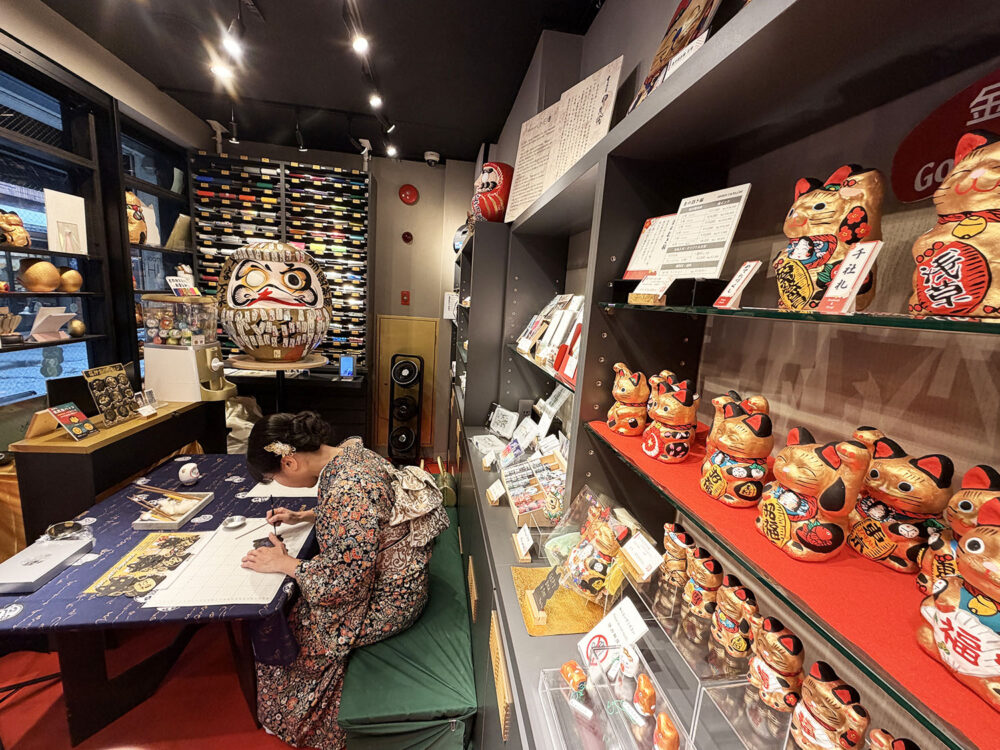
When visiting Asakusa in Tokyo, there’s much more to experience beyond iconic attractions such as Kaminarimon Gate, Senso-ji Temple, Nakamise-dori, and Tokyo Skytree.
If you’d like to add something a little different to your Asakusa itinerary, why not plan a day combining kimono and gold leaf experiences? Start by choosing your favorite kimono at Asakusa Yae Kimono, then stroll through the streets of Asakusa in traditional attire before heading to Kinpaku-ya Uhee for a gold leaf workshop. There, you can create your very own gold leaf piece by hand and finish the experience with a gold and silver leaf ice cream.
This itinerary is about more than just taking photos. It gives you the chance to experience traditional Japanese craftsmanship firsthand, learn about the history and cultural uses of gold leaf in Japan, and discover the meanings behind beloved Japanese lucky symbols such as maneki-neko and Daruma dolls.
The highlight of this itinerary is Kinpaku-ya Uhee, a specialty gold leaf shop located in Asakusa.
Rather than simply buying a gold leaf souvenir, creating your own piece gives you a better understanding of what makes this traditional craft so special. For first-time visitors, it is also an easy and enjoyable way to get introduced to the world of Japanese gold leaf.
目次
- 1 Dress in a Kimono and Start Your Day of Cultural Experiences in Asakusa
- 2 Kinpaku-ya Uhei: Step into Asakusa’s Golden World
- 3 Apply Gold Leaf by Hand and Create Your Own Piece
- 4 Maneki-neko, Daruma, and Gold Leaf: Discover Japan’s Culture of Good Fortune
- 5 Gold Leaf Is More Than a Traditional Craft—it’s Part of Modern Life
- 6 Why Try a Gold Leaf Workshop Instead of Just Buying a Souvenir?
- 7 Gold and Silver Leaf Ice Cream: A Sweet Way to End the Experience
- 8 Kimono + Gold Leaf: A Different Way to Experience Asakusa
- 9 Add a Gold Leaf Experience to Your Asakusa Itinerary
Dress in a Kimono and Start Your Day of Cultural Experiences in Asakusa
For many visitors to Asakusa, wearing a kimono is an experience worth adding to the itinerary.
At Yae Kimono Asakusa, you can choose a kimono based on your personal style, from traditional floral patterns to more colorful and playful designs. With a wide range of colors, patterns, and styles available, it’s easy to find a look that suits you.
Once you’ve changed into your kimono and had your hair professionally styled, you’re ready to explore Asakusa.
The large red lantern at Kaminarimon Gate, the traditional shops along Nakamise-dori, and the vivid vermilion architecture of Senso-ji Temple are some of the most iconic sights in Asakusa. Walking through these historic streets in a kimono is not only a great photo opportunity, but also adds a touch of traditional Japanese atmosphere to the experience.
When you visit Asakusa in kimono, start with Kaminarimon Gate and Senso-ji Temple before taking a leisurely stroll along Nakamise-dori.
But this time, why not make your kimono experience about more than just taking photos?
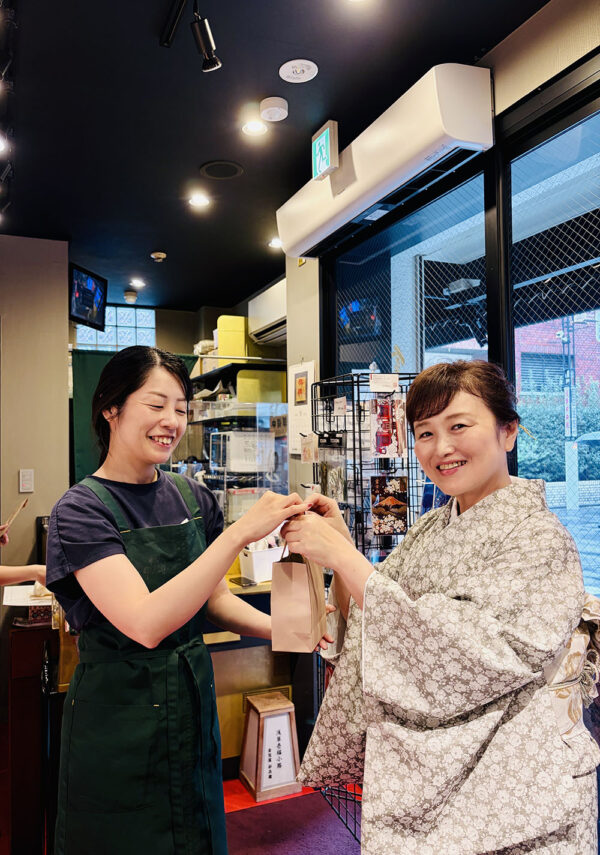
Wearing a kimono while visiting Kinpaku-ya Uhei and joining a gold leaf workshop gives you the opportunity to experience Japanese traditional craftsmanship firsthand, adding something different to your day while you are already dressed in traditional Japanese clothing for the full immersive experience.
Combining the two in one day is also a great option for first-time visitors to Tokyo who want to include some cultural experiences in their itinerary.
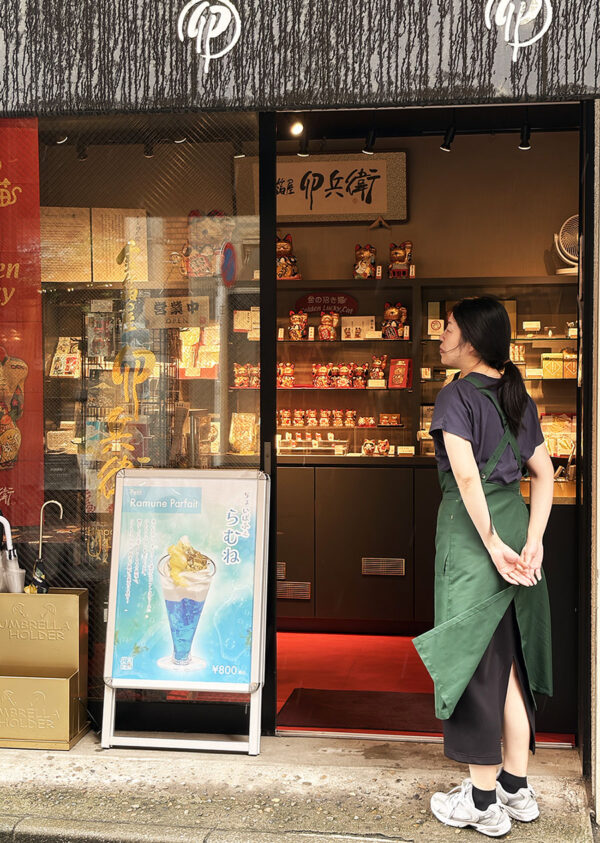
Kinpaku-ya Uhei: Step into Asakusa’s Golden World
As you walk through the streets of Asakusa and arrive at Kinpaku-ya Uhei, you’ll find a variety of gold leaf products and artworks inside the shop.
Kinpaku-ya Uhei is a specialty gold leaf shop operated by the Murata Gold Leaf Group in Asakusa. In addition to selling gold leaf products, the shop introduces gold leaf through workshops, art, food, and lifestyle products, showing how this traditional craft can also be a part of modern everyday life.
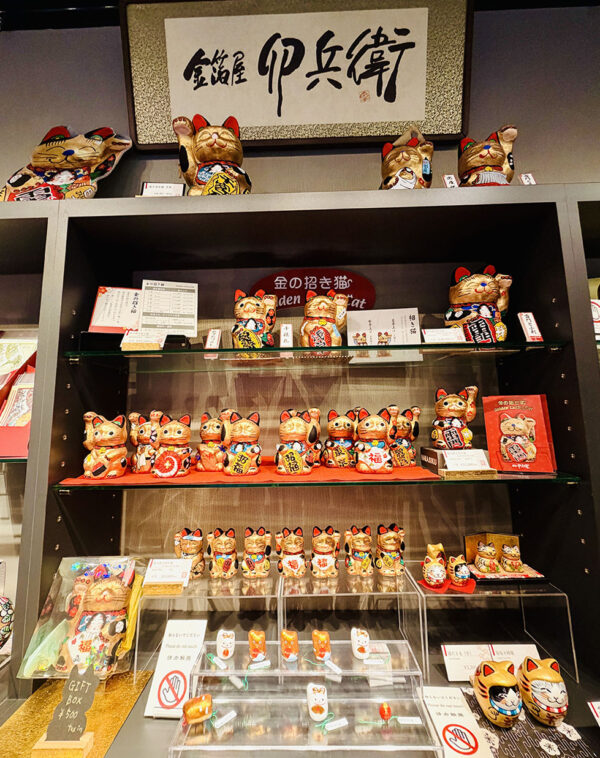
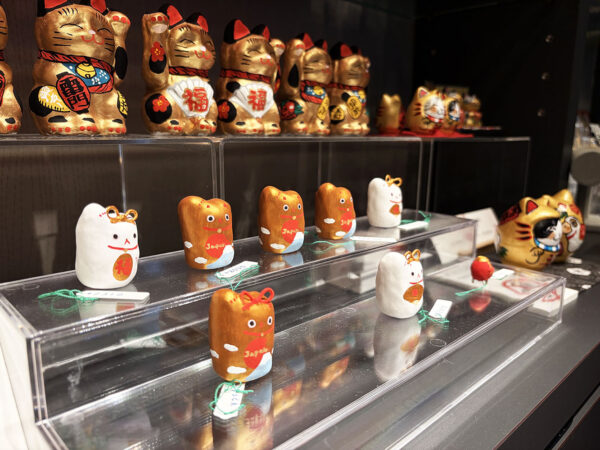
Inside the shop, you’ll find familiar Japanese symbols associated with good fortune, including maneki-neko and Daruma dolls, as well as gold leaf works in a variety of styles by different Japanese artists.
For first-time visitors, one of the most interesting things about the shop is that you can do more than shopping.
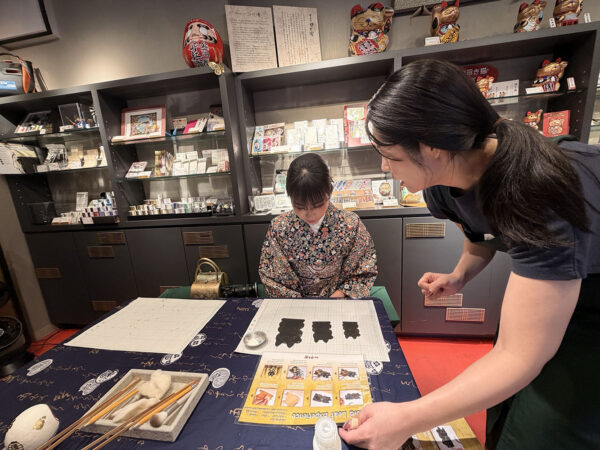
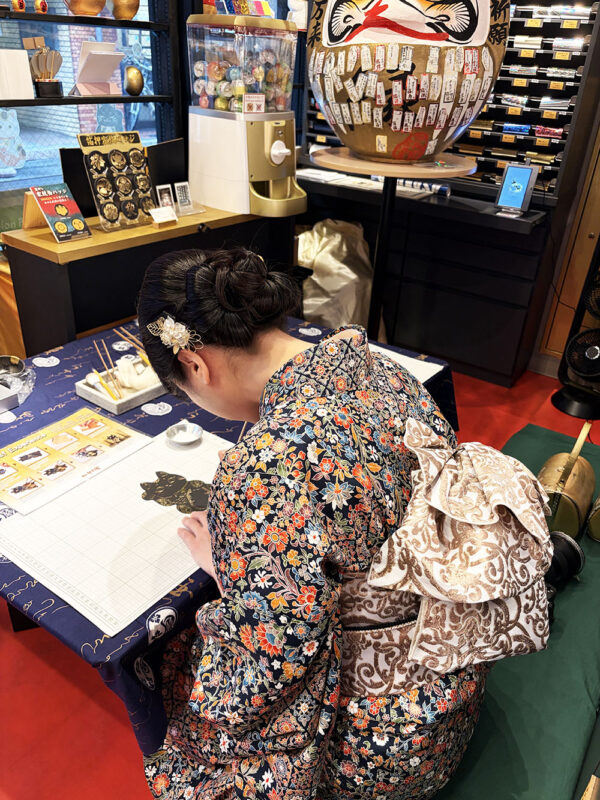
In addition to browsing the store and admiring the artwork, you can join a gold leaf workshop and create a piece of your own.
This is one of the things that makes Kinpaku-ya Uhei different from a typical souvenir shop.
If you simply purchase a gold leaf item, you may see it as a beautiful souvenir. But after taking part in a workshop, you’ll have a much better understanding of just how thin gold leaf is, what to be careful about when handling it, and how a finished gold leaf piece is created.
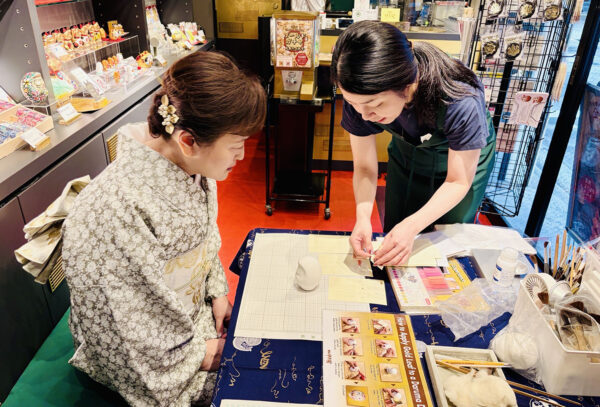
Apply Gold Leaf by Hand and Create Your Own Piece
When people first see gold leaf, they may think of it simply as a very thin sheet of golden material.
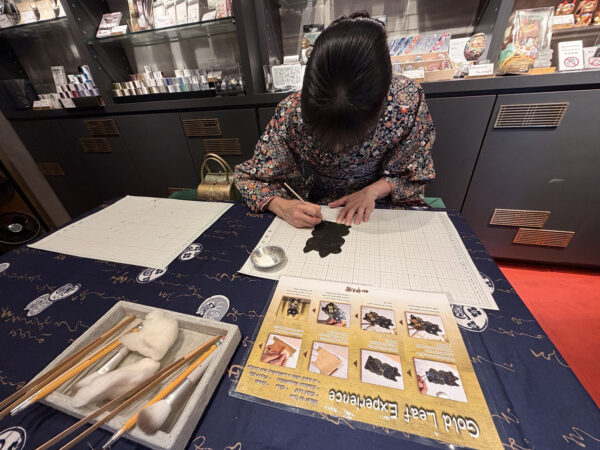
But once you start working with it, you quickly realize that gold leaf is even more delicate than it looks and requires a certain amount of patience.
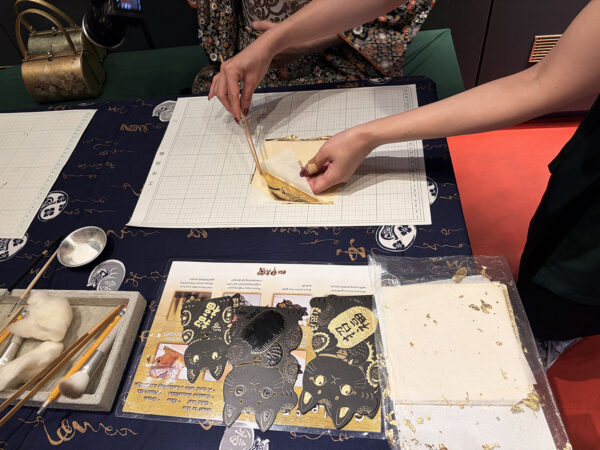
Gold leaf can be beaten and extended to an extremely thin layer, so it needs to be handled and applied with care. If you have never worked with gold leaf before, you may initially worry about getting it right.
The good news is that no professional experience is required for the workshop.
With guidance from the staff, you can work through each step, from choosing your design and deciding where to place the gold leaf to learning how to apply it.
There’s no need to rush when applying the gold leaf. Following each step carefully and taking your time is part of what makes the experience enjoyable.
What starts as a sheet of gold leaf on the table eventually becomes a finished piece through your own design and handiwork.
Creating something yourself is what makes the experience different from simply buying a souvenir.
If you come with friends, you can have fun and compare your finished pieces. Couples and families can also create their own original works and take them home as keepsakes.
For families traveling with children, the workshop can also be a fun way to introduce them to traditional Japanese craftsmanship, provided the activity and age requirements are suitable.
Maneki-neko, Daruma, and Gold Leaf: Discover Japan’s Culture of Good Fortune
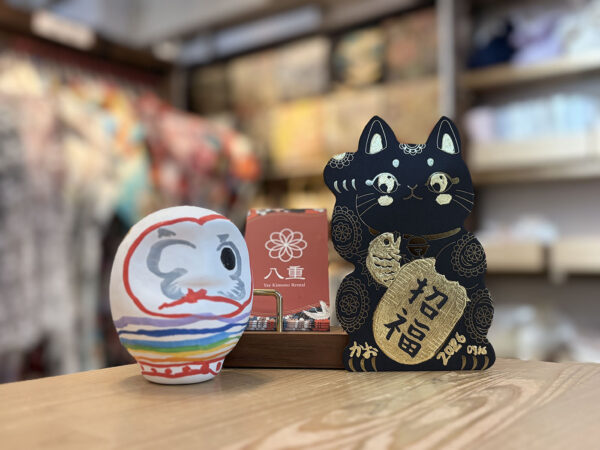
At Kinpaku-ya Uhei, you’ll find many elements associated with good fortune, including maneki-neko and Daruma dolls.
Among them, the maneki-neko is perhaps one of the Japanese lucky symbols most commonly associated with bringing good fortune.
With one paw raised as if waving to visitors, the maneki-neko comes with different traditional interpretations depending on which paw is raised.
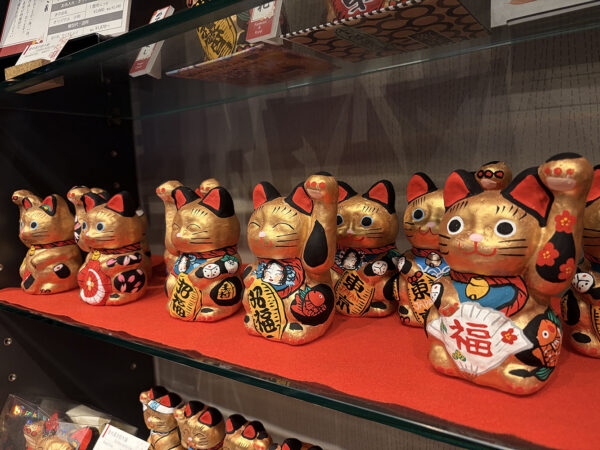
A common belief is that a raised right paw is associated with attracting wealth and financial good fortune, while a raised left paw is associated with welcoming customers and attracting positive relationships.
This is why maneki-neko can often be found at the entrances of shops, restaurants, and businesses throughout Japan.
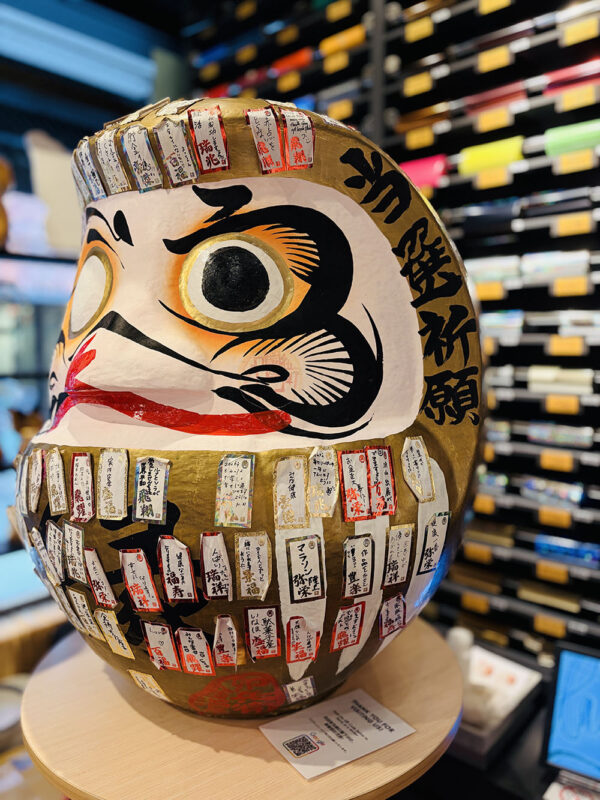
Daruma is another highly recognizable Japanese symbol of good fortune.
With its round body and lack of visible arms and legs, the Daruma may look simple, but it carries the meaning of “Nanakorobi Yaoki,” or “fall seven times, stand up eight.” It represents the idea of getting back up even after facing setbacks.
In Japan, Daruma dolls are often used to express wishes and goals, such as achieving an objective, succeeding in business, passing an exam, or seeing a personal wish come true.
There is also a traditional custom of painting the eyes of a Daruma. When making a wish, one eye is painted first, and the second eye is added once the wish has been fulfilled.
These cultural elements add another layer of meaning to the gold leaf workshop.
Beyond learning how to work with gold leaf, you can also learn about Japanese ideas of good fortune and wishes through designs featuring maneki-neko, Daruma, and other traditional symbols.
If your finished gold leaf piece carries a meaning of good fortune, it can also become a memorable travel keepsake to take home with you.
Gold Leaf Is More Than a Traditional Craft—it’s Part of Modern Life
When people think of Japanese gold leaf, they may first picture temples, Buddhist altars, lacquerware, or traditional architecture.
Gold leaf does indeed have a long history in Japan and has traditionally been used in religious architecture, Buddhist altars, lacquerware, folding screens, and other forms of craftsmanship.
Kanazawa in Ishikawa Prefecture is one of Japan’s most important gold leaf production centers, where gold leaf making has developed into a long-established local industry and craft.
Gold leaf is valued not only for its beautiful golden appearance, but also for how incredibly thin it is and the skill required to produce it.
Making gold leaf requires years of experience and highly refined craftsmanship, from processing the gold to repeatedly beating and extending it into an extremely thin sheet. Careful control of both technique and working conditions is also essential.
Today, however, the use of gold leaf has expanded far beyond traditional crafts.
Gold leaf can now be found in art, design, stationery, lifestyle products, and food, showing how this traditional material can be incorporated into contemporary life.
You can see this evolution at Kinpaku-ya Uhei as well.
Traditional gold leaf elements are presented through more modern designs and mediums, while familiar Japanese cultural symbols such as maneki-neko and Daruma are given a new look through gold leaf.
Visiting the shop is therefore not only a way to learn about the history of gold leaf, but also an opportunity to see how this traditional craft continues to find a place in modern Japanese life.
Why Try a Gold Leaf Workshop Instead of Just Buying a Souvenir?
If you simply want to buy a gold leaf souvenir, there are plenty of places in Japan where you can find one.
But if you have the time, taking part in a workshop offers a completely different experience.
Once you actually work with gold leaf, you realize that it’s not simply just a matter of “sticking something gold onto a surface.”
From designing your pattern and deciding where to place the gold leaf to carefully applying it, every step requires attention to detail.
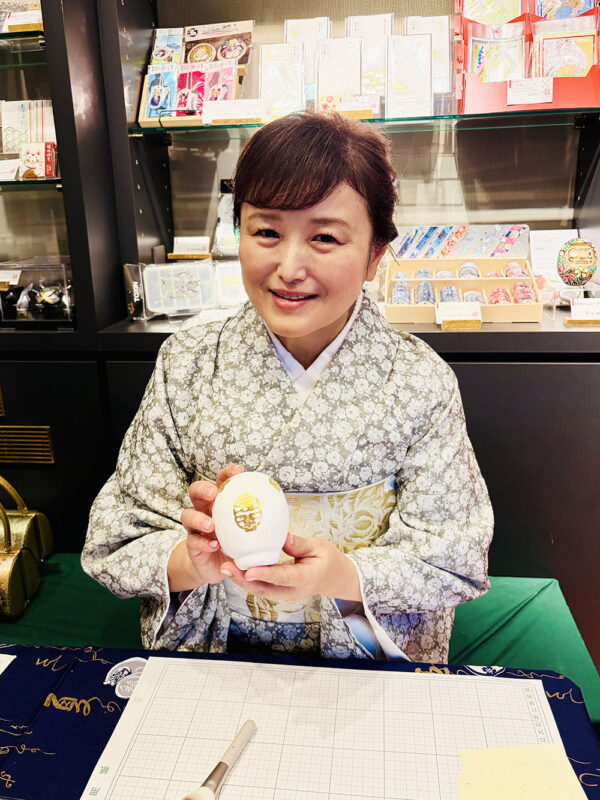
The finished piece will also reflect your own handicraft and personal style.
Even when everyone uses the same materials, the final results can look completely different.
That is part of the charm of a hands-on experience.
It doesn’t have to be perfect. What matters is that you took part in the entire process and created something yourself.
For travelers, this adds a memorable experience to the trip that simply purchasing a souvenir cannot provide.
Years later, when you see the piece again, it may even bring back memories of the time you spent taking part in a gold leaf workshop in Asakusa.
So if you’re already planning to explore Asakusa, consider setting aside some time for a gold leaf experience.
Gold and Silver Leaf Ice Cream: A Sweet Way to End the Experience
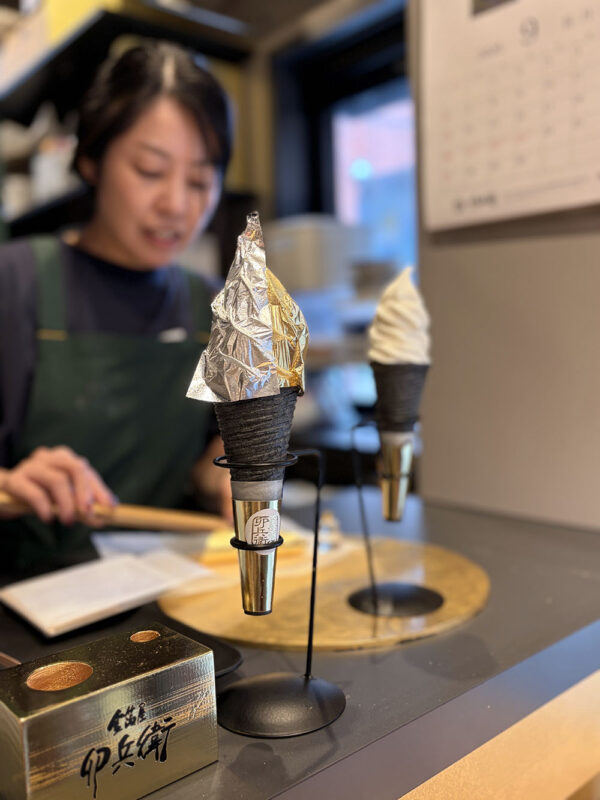
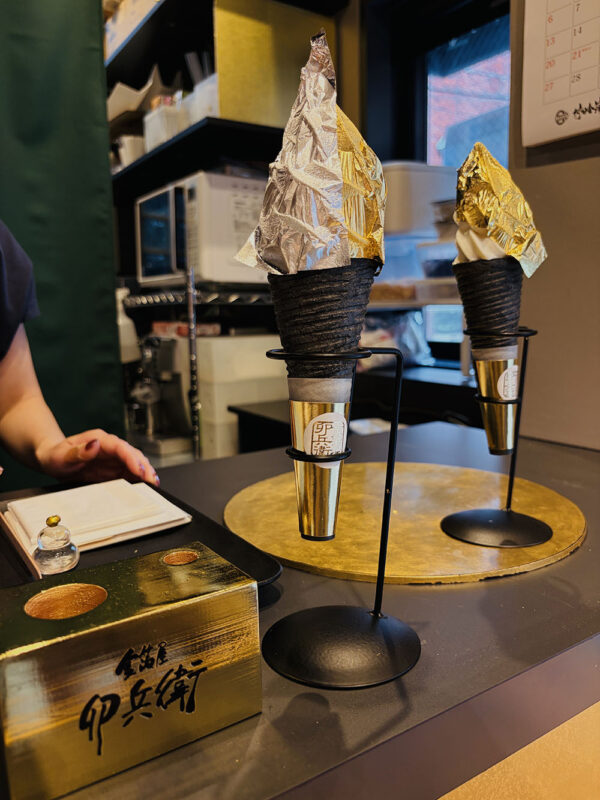
After completing the workshop, leave a little time to try Kinpaku-ya Uhei’s gold and silver leaf ice cream.
The ice cream features soft-serve milk ice cream topped with both gold and silver leaf. The combination of gold and silver makes it very eye-catching.
And if you’re still wearing your kimono, it makes for an especially photogenic treat.
The appeal of gold leaf ice cream, however, isn’t about “the benefits of eating gold.” Instead, it is a unique experience that combines Japanese gold leaf culture with dessert.
Food-grade edible gold leaf can be used as a decorative ingredient in food, but gold leaf itself is not a nutritional supplement in the usual sense and should not be regarded as a food with beauty, detoxifying, or therapeutic benefits.
So rather than expecting any special effects from eating gold leaf at Kinpaku-ya Uhei, it’s better to enjoy it as a fun and memorable cultural experience.
For travelers, the gold leaf ice cream is also a distinctive Asakusa dessert that is easy to remember.
After enjoying your ice cream, you can continue strolling through the streets of Asakusa in your kimono and slowly bring your day to an end.
Kimono + Gold Leaf: A Different Way to Experience Asakusa
If you’d like to combine all of these experiences into one day, here is one possible itinerary.
Start your morning at Yae Kimono Asakusa, where you can choose a kimono you love. After getting dressed and having your hair styled, head to Kaminarimon Gate, Nakamise-dori, and Senso-ji Temple for a leisurely walk.
Along the way, you can take photos and browse the shops lining Nakamise-dori while enjoying the distinctive atmosphere of Asakusa’s historic streets.
Next, make your way to Kinpaku-ya Uhei.
In addition to browsing the shop’s gold leaf products and artworks, you can join a gold leaf workshop, learn more about the material, and create your own piece by hand.
After the workshop, take some time to explore the other gold leaf products in the shop. If you find something you like, you can also choose a piece to take home as a souvenir.
Finally, treat yourself to a delicious gold and silver leaf ice cream.
With this itinerary, you can enjoy a full day of kimono, an Asakusa stroll, traditional craftsmanship, a hands-on workshop, and dessert.
For first-time visitors to Tokyo, it’s a great way to experience both the streets of Asakusa and aspects of traditional Japanese culture in one day. And if you’ve already visited Asakusa and are looking for something a little different, adding a gold leaf workshop can be a fun activity.
Add a Gold Leaf Experience to Your Asakusa Itinerary
Asakusa attracts visitors not only because of landmarks such as Kaminarimon Gate and Senso-ji Temple, but also because many elements of traditional Japanese culture can still be experienced here today.
Gold leaf is one of the traditional crafts that is particularly interesting to discover.
At Kinpaku-ya Uhei, you can experience gold leaf from different perspectives: admire gold leaf artwork, learn about its cultural background, shop for related products, or take part in a workshop and create something yourself.
Combine this with a kimono experience, and you can create a more memorable day in Asakusa.
Start by putting on a kimono and exploring the streets, then learn about traditional craftsmanship through a gold leaf workshop, and finish the day with a gold and silver leaf ice cream.
The itinerary doesn’t have to be complicated, but each part offers a different kind of experience.
For anyone interested in Japanese culture, crafts, kimono, or unique desserts, this can be a memorable addition to an Asakusa itinerary.
If you have the chance to visit Asakusa in Tokyo, consider setting aside half a day or even a full day. In addition to visiting the famous sights, take some time to experience a traditional Japanese craft firsthand.
Put on a kimono, explore the historic streets of Asakusa, and create your own gold leaf piece.
Compared to simply visiting one attraction after another, this kind of travel experience gives you the chance to actively take part in something—and offers a deeper look at how traditional Japanese culture continues to take on new forms in modern life.
Kinpaku-ya Uhei | Store Information
📍 1-31-8 Asakusa, Taito City, Tokyo
🕙 Opening Hours: Generally 10:00 AM–6:00 PM
📅 Closed: Tuesdays
Official Website: https://www.kimpakuya-uhei.jp/golden-lucky-cat/
※ Opening hours, regular holidays, and workshop details may change. Please check the latest information on the official website before your visit.