Inquiries / Change reservation
Yae's Blog
Your Very Own Tokyo Kimono Journey
🌸👘 Step out of Asakusa and embark on a brand-new walking experience. 🚋🍵
Tokyo is a city where tradition and modernity intertwine, offering both rich history and vibrant trends. For a unique experience, start your journey in Asakusa by changing into a Kimono/Yukata, then hop on the subway to Nihonbashi and set off on a delightful stroll full of surprises.
目次
- 1 👘 Put on a kimono at Yae in Asakusa and begin your journey through time
- 2 🚋 Access: Just over 10 minutes from Asakusa to Nihonbashi
- 3 🏮 Strolling Through Nihonbashi: Exploring Machi-no-Terrace and Local Shops
- 4 🍣 Food Recommendations: “Tsujihan” and Traditional Japanese Sweets
- 5 ⛩️ Koami Shrine: Tokyo’s Strongest Money-Luck Shrine
👘 Put on a kimono at Yae in Asakusa and begin your journey through time
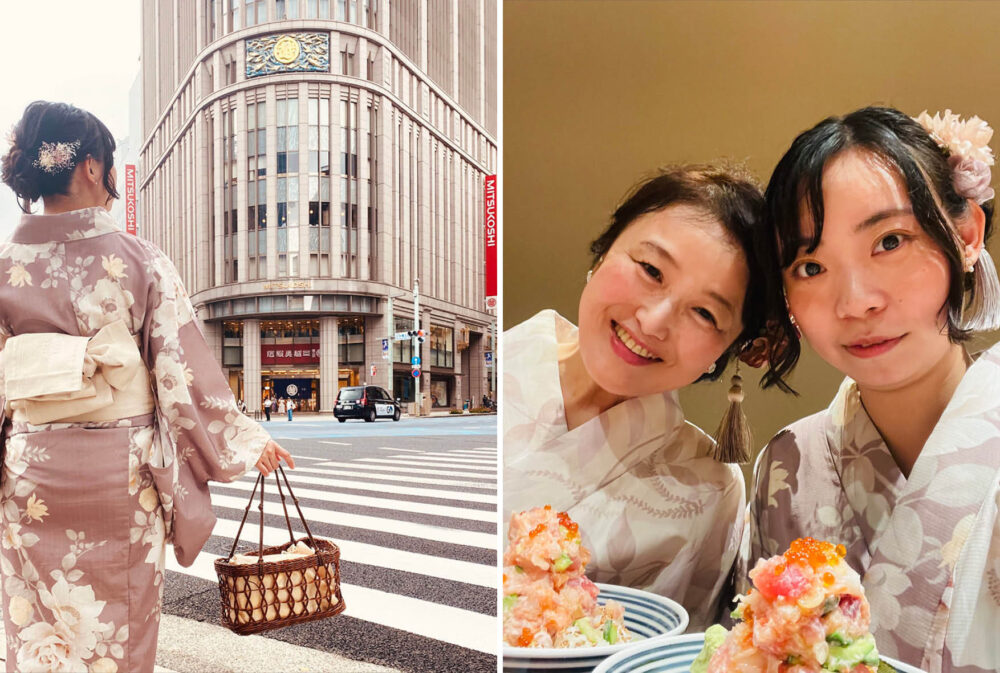
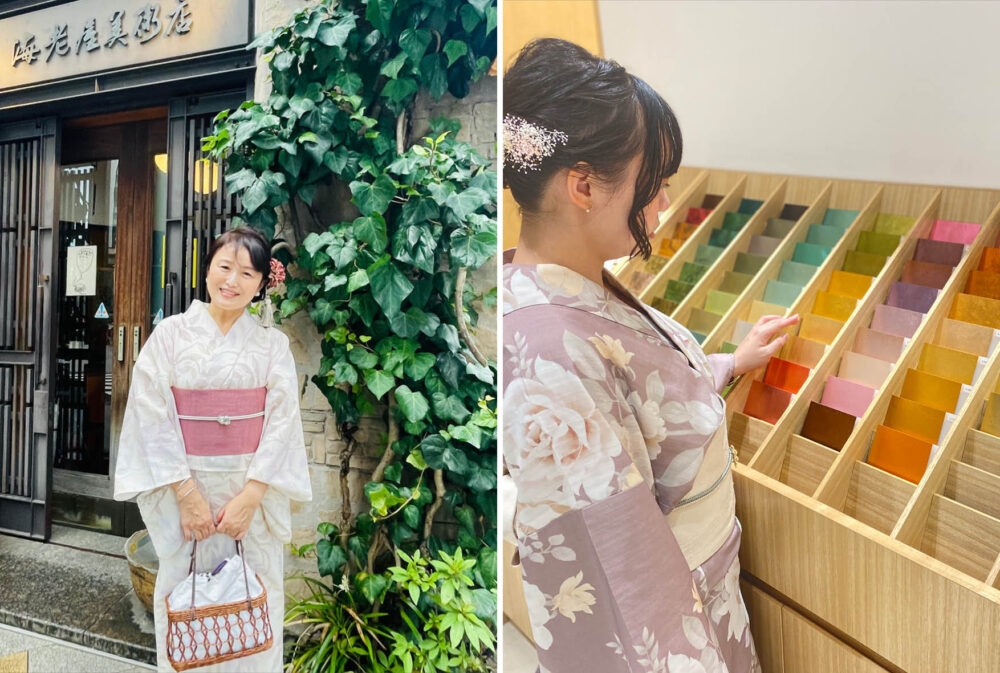
First, we recommend visiting Yae Kimono Rental in Asakusa to choose a Yukata that feels uniquely yours. Whether you prefer an elegant floral pattern or playful seasonal colors, the moment you put it on you’ll feel as if you’ve stepped back in time. Our professional staff will help adjusting the obi, styling your hair, and adding matching accessories for you with styling suggestions. Finally, you can pick a traditional Japanese handbag to complete your look ! At that moment, you are no longer just a traveler—you become a distinctive part of the Tokyo scenery.
🚋 Access: Just over 10 minutes from Asakusa to Nihonbashi
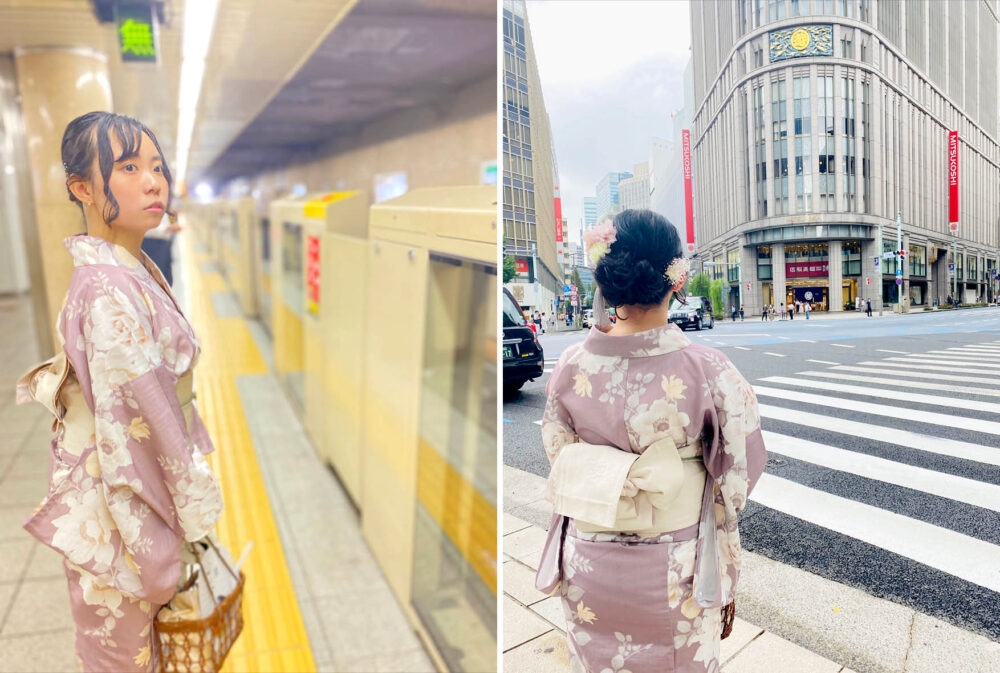
After changing into your Yukata, take the Ginza Line from Asakusa Station, and in just over ten minutes you’ll arrive in Nihonbashi. The moment you step out of the station, the atmosphere shifts: the bustle and crowds of Kaminarimon give way to a more quiet and refined elegance. Since the Edo period, Nihonbashi has thrived as a commercial hub, and it still retains a rich sense of history and culture today. Walking across the stone arch bridge in Yukata, you may feel as if you’ve stepped straight into a scene from a traditional Ukiyo-e print.
🏮 Strolling Through Nihonbashi: Exploring Machi-no-Terrace and Local Shops
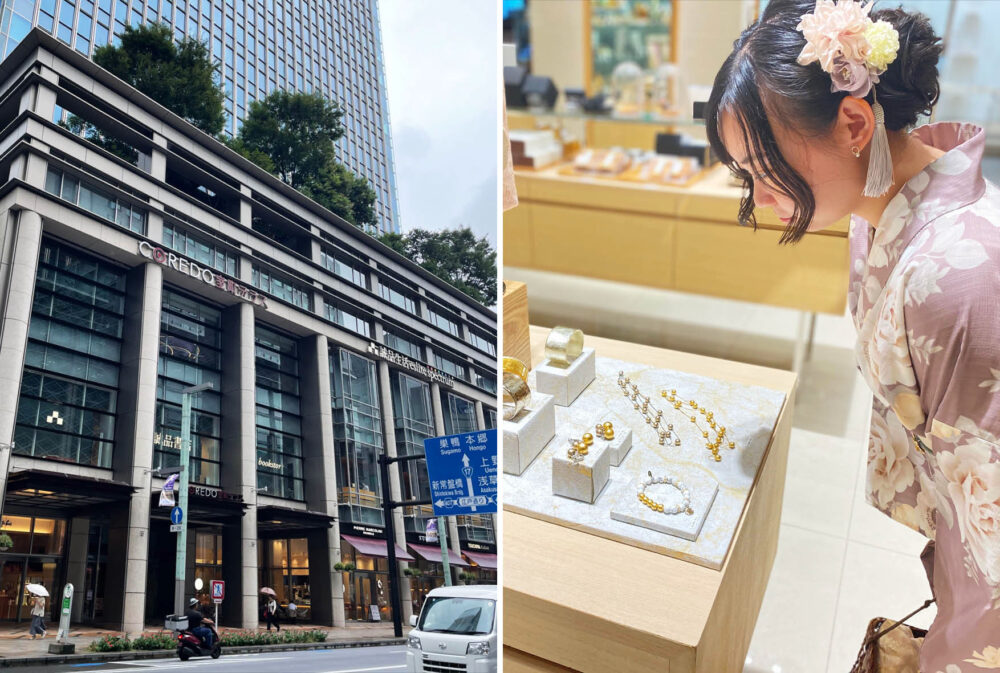
Next, head to Machi-no-Terrace, where a collection of small shops proudly showcase the spirit of Japanese craftsmanship. A specialty shop dedicated to kombu dashi fills the air with a savory aroma, evoking memories of a warm family table. Nearby, you’ll find delicate Japanese accessories and handicrafts—elegant hairpins, handcrafted pottery, and fabric pouches—each piece brimming with details and charm. As the hem of your kimono sways with every step, it blends seamlessly with the classical atmosphere of the streets, making you feel as if you’ve wandered into an Edo-period marketplace.
🍣 Food Recommendations: “Tsujihan” and Traditional Japanese Sweets
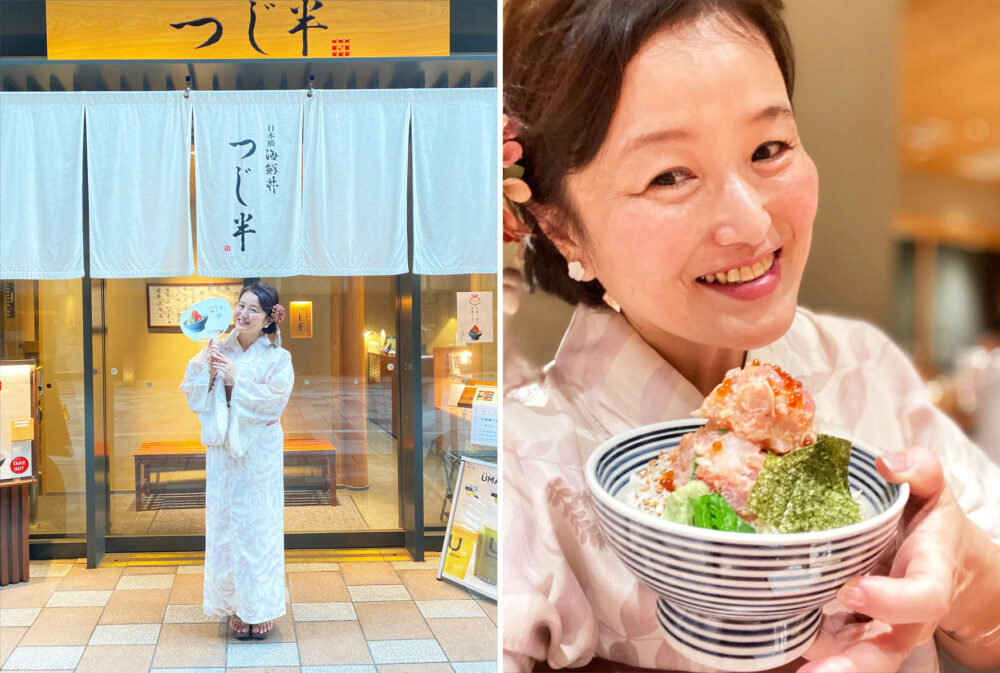
After a leisurely stroll, take a break to enjoy a delicious meal. We recommend Tsujihan, a restaurant renowned for its fresh seafood and skill of their chefs. Indulge in delicacies such as melt-in-your-mouth sashimi and beautifully prepared set meals. Sitting down in your Yukata to savor these dishes is not only a feast for the taste buds but also an experience that feels both graceful and ceremonial. Afterward, stop by one of the traditional Wagashi shops nearby for a sweet treat—perhaps a red bean Daifuku or a matcha dessert—to end your walk on a perfect, delightful note.
⛩️ Koami Shrine: Tokyo’s Strongest Money-Luck Shrine
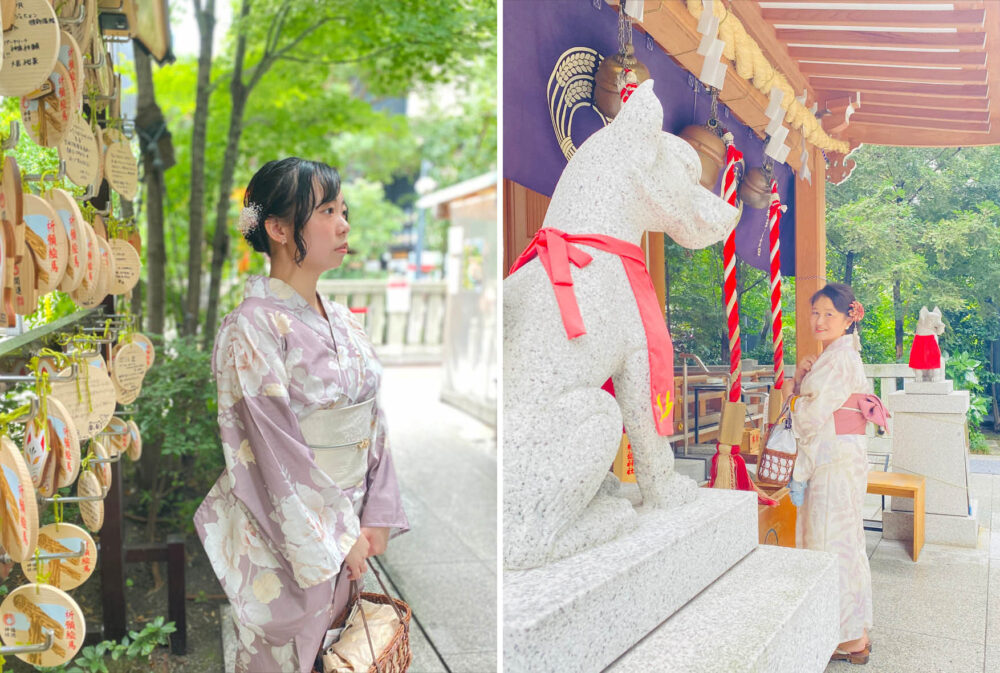
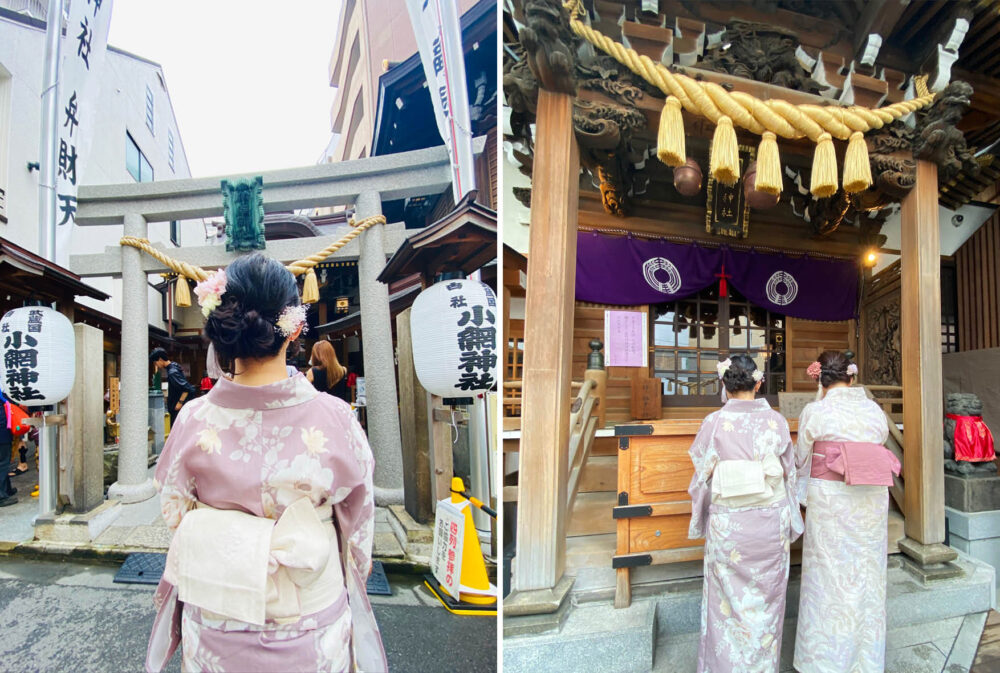
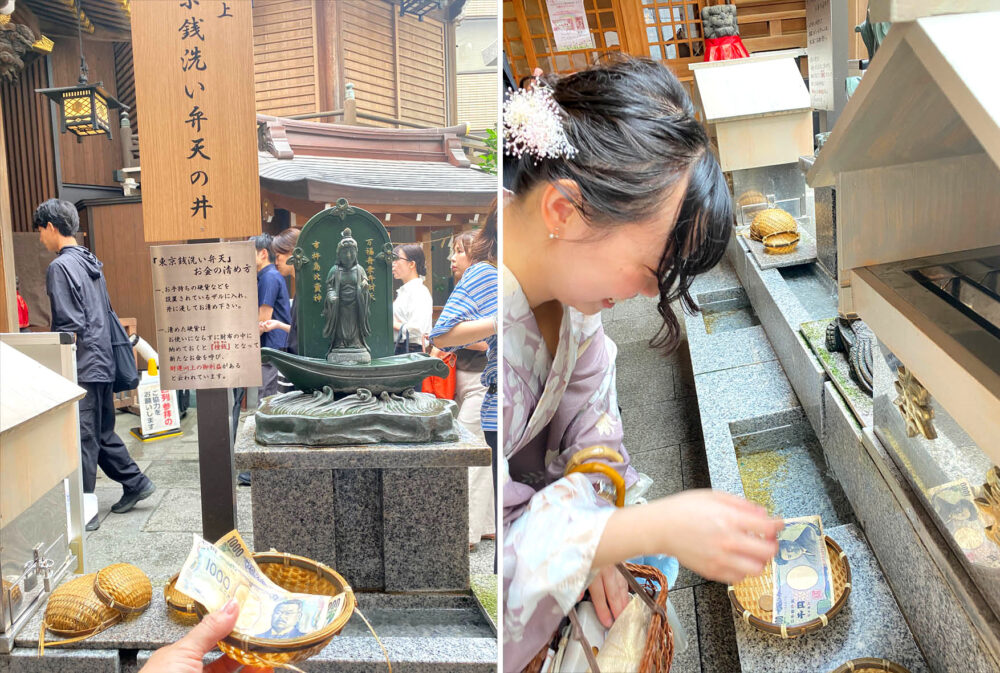
Finally, be sure to visit Koami Shrine, a small yet remarkably popular shrine with over 550 years of history. Known as “Tokyo’s most powerful money-luck shrine,” it is a place where visitors pray for good fortune, protection from misfortune, and blessings of prosperity. Within the grounds lies the famous Zeniarai-no-I, a “money-washing well.” Legend says that rinsing coins, banknotes, or even credit cards in its sacred water will allow you to carry good luck and wealth home with you. Don’t forget to bring a few five-yen coins and some bills to make your visit even more auspicious.
Conclusion: Kimono is the key to experiencing Tokyo’s charm
From Asakusa to Nihonbashi, it’s only a short subway ride, yet the journey reveals two completely different sides of Tokyo. A kimono/Yukata is more than just a type of traditional clothing—it is a key that unlocks a deeper connection to the city’s culture and atmosphere. We highly suggest, for your next visit to Tokyo: start it from Asakusa, slip into a kimono/Yukata(in summer), and set out on a stroll through Nihonbashi, where history, culture, cuisine, and spirituality intertwine. It will surely become an unforgettable Tokyo experience !